
Many event marketing campaigns fail long before the event itself begins.
The issue is rarely the venue, the product, or even the marketing budget. More often, the real problem is staffing.
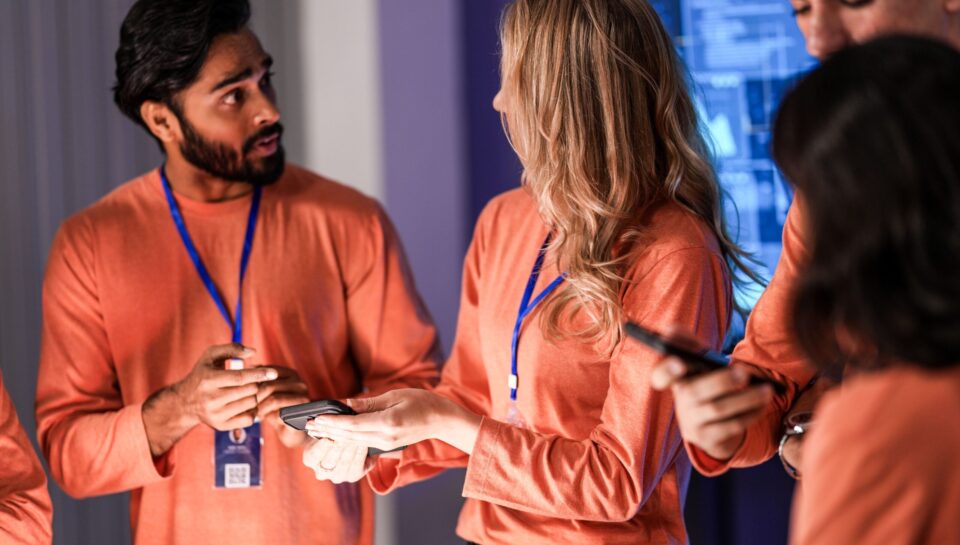
Brands invest heavily in event logistics, booth design, sponsorships, and promotional materials, yet underestimate the impact of the people representing the company on the floor. In experiential marketing, staff performance directly shapes customer perception, lead quality, and overall campaign ROI.
A poorly trained representative can weaken trust within seconds. A skilled event professional can create meaningful customer engagement almost immediately.
That difference has become increasingly important as brands compete for attention in crowded retail spaces, trade shows, pop-up activations, and community events.
HubSpot (https://www.hubspot.com/marketing-statistics) has consistently reported that consumers respond more positively to personalized engagement than generalized marketing outreach. Live events amplify this reality because customers interact directly with real people instead of digital messaging.
The challenge for many businesses is scalability.
Running one successful event is manageable. Expanding consistent performance across multiple locations, cities, or campaigns is significantly more difficult. Staffing inconsistency often becomes the biggest operational bottleneck.
This is why many growing brands now prioritize specialized experiential staffing partners rather than relying on temporary labor pools with limited brand training or sales experience.
Professional event staffing involves far more than assigning individuals to a booth. Effective activation teams require product knowledge, communication skills, objection handling, adaptability, and the ability to maintain consistent messaging under pressure.
In sectors where customer acquisition depends on trust and clarity, the quality of event staff can directly influence revenue outcomes.
According to Forbes (https://www.forbes.com/), live experiences create stronger emotional engagement than passive digital interactions because customers feel personally connected to the brand conversation.
That emotional connection depends heavily on the people leading the interaction.
High-performing event organizations increasingly focus on repeatable training systems rather than one-off staffing placements. This approach allows campaigns to scale without sacrificing customer experience quality.
Tailored Events USA has structured much of its experiential marketing model around this concept. Their event staffing and activation systems prioritize training, live coaching, measurable performance metrics, and operational consistency across campaigns. Businesses evaluating scalable event execution strategies often begin by exploring their experiential marketing services (https://tailoredeventsusa.com/our-services/).
Another important consideration is conversion efficiency.
Brands often calculate event success based on attendance numbers rather than meaningful engagement. However, experienced field marketing teams focus on conversation quality, demonstration effectiveness, and conversion movement through each stage of the customer journey.
McKinsey & Company (https://www.mckinsey.com/capabilities/growth-marketing-and-sales/our-insights/the-new-b2b-growth-equation) has emphasized that customer-facing interactions remain critical growth drivers even as automation expands across industries.
Experiential campaigns work best when staffing teams understand both branding and sales psychology.
This includes recognizing customer intent, adapting communication styles, simplifying product messaging, and guiding conversations naturally toward action. Strong staffing also protects brand reputation by ensuring professionalism and consistency during every interaction.
As experiential marketing becomes more competitive, businesses are beginning to view event staffing as a strategic growth investment rather than a temporary operational expense.
Companies researching scalable field marketing support often review organizational experience, training philosophy, and campaign structure before launching activation programs. Additional insight into operational strategy and company background can be found through the Tailored Events USA company overview (https://tailoredeventsusa.com/about-company/).
In-person marketing continues evolving, but one factor remains constant: people influence purchasing decisions.
The brands that invest in trained, structured, customer-focused event teams will continue outperforming campaigns built around visibility alone.
Organizations looking to strengthen lead generation events, improve experiential marketing ROI, or expand activation campaigns can explore additional resources or connect directly with the Tailored Events USA team through their contact page (https://tailoredeventsusa.com/contact-us/).